jawnwats:

prismatic-bell:

cj-amused:

tenoko1:

evildorito:

onewordtest:

trikruwriter:

“This is your daily, friendly reminder to use commas instead of periods during the dialogue of your story,” she said with a smile.

“Unless you are following the dialogue with an action and not a dialogue tag.” He took a deep breath and sat back down after making the clarifying statement. 

“However,” she added, shifting in her seat, “it’s appropriate to use a comma if there’s action in the middle of a sentence.”

“True.” She glanced at the others. “You can also end with a period if you include an action between two separate statements.”

Things I didn’t know

“And–” she waved a pen as though to underline her statement–“if you’re interrupting a sentence with an action, you need to type two hyphens to make an en-dash.”

You guys have no idea how many students in my advanced fiction workshop didn’t know any of this when writing their stories.

critical-failqueer:

more dnd campaigns with overtly fantastic plots. full on fairy tale bullshit. like something out of mythology or a fable. 

the party is tasked to retrieve the moon, which has been stolen from the sky. 87% chance the moon is also sentient. 

a color that was locked away by the gods for being too beautiful/terrible/powerful is released again and a dragon of that color now threatens the land. also because it’s new it’s in fashion and everyone who can get their hands on it is wearing this color and it’s starting to give you a headache. 

relieve the land of their drought by finding what happened to the rain and bringing it back. 

go wild. have fun

240 Words to Describe Someone’s Tone/Voice

smut-101:

  1. Abrasive – showing little concern for the feelings of others; harsh
  2. Absurd – wildly unreasonable, illogical, or inappropriate
  3. Accusatory – suggesting someone has done something wrong, complaining
  4. Acerbic – sharp and forthright
  5. Acidic – harsh or critical
  6. Admiring – approving; think highly of; respectful; praising
  7. Aggressive – hostile; determined; forceful; argumentative
  8. Aggrieved –  angry and sad because you think you have been unfairly treated
  9. Airy –  giving an impression of being unconcerned or not serious
  10. Ambivalent – having mixed feelings; uncertain; in a dilemma; undecided
  11. Amused – pleasantly; entertain or divert in an enjoyable or cheerful manner
  12. Angry – incensed or enraged; threatening or menacing
  13. Animated – full of life or excitement; lively; spirited; impassioned; vibrant
  14. Anxious –  typically with a feeling of unease
  15. Apathetic – showing little interest; lacking concern; indifferent; unemotional
  16. Apologetic – full of regret; repentant; remorseful; acknowledging failure
  17. Appreciative – grateful; thankful; showing pleasure; enthusiastic
  18. Ardent – enthusiastic; passionate
  19. Arrogant – pompous; disdainful; overbearing; condescending; vain; scoffing
  20. Assertive – self-confident; strong-willed; authoritative; insistent
  21. Authoritative – commanding and self-confident
  22. Awestruck – amazed, filled with wonder/awe; reverential
  23. Barbed – deliberately hurtful
  24. Barking – utter a command or question abruptly or aggressively
  25. Belligerent – hostile; aggressive; combatant
  26. Benevolent – sympathetic; tolerant; generous; caring; well meaning
  27. Bitter – angry; acrimonious; antagonistic; spiteful; nasty
  28. Blasé – unimpressed or indifferent to something because one has experienced or seen it so often before
  29. Bleak – without hope or encouragement; depressing; dreary
  30. Bombastic – high-sounding but with little meaning; inflated
  31. Booming – loud, deep, and resonant
  32. Bored – to tire or make weary by being dull, repetitious, or uninteresting
  33. Brash – self-assertive in a rude, noisy, or overbearing way
  34. Braying – speak or laugh loudly and harshly
  35. Breathy – producing or causing an audible sound of breathing, often related to physical exertion or strong feelings
  36. Breezy – appearing relaxed, informal, and cheerily brisk
  37. Brittle – lacking warmth, sensitivity, or compassion; aloof
  38. Bubbly – full of cheerful high spirits
  39. Burbling – speak in an unintelligible or silly way, typically at unnecessary length
  40. Callous – cruel disregard; unfeeling; uncaring; indifferent; ruthless
  41. Candid – truthful, straightforward; honest; unreserved
  42. Caustic – making biting, corrosive comments; critical
  43. Cautionary – gives warning; raises awareness; reminding
  44. Celebratory – praising; pay tribute to; glorify; honour
  45. Chatty – informal; lively; conversational; familiar
  46. Cheery – happy and optimistic
  47. Childish – silly and immature
  48. Chirping – say something in a lively and cheerful way
  49. Clipped – speech that is fast, that uses short sounds and few words, and that is often unfriendly or rude
  50. Cloying – disgust or sicken (someone) with an excess of sweetness, richness, or sentiment
  51. Coarse – rude, crude, or vulgar
  52. Colloquial – familiar; everyday language; informal; colloquial; casual
  53. Comic – humorous; witty; entertaining; diverting
  54. Compassionate – sympathetic; empathetic; warm-hearted; tolerant; kind
  55. Complex – having many varying characteristics; complicated
  56. Compliant – agree or obey rules; acquiescent; flexible; submissive
  57. Concerned – worried; anxious; apprehensive
  58. Conciliatory – intended to placate or pacify; appeasing
  59. Condescending – stooping to the level of one’s inferiors; patronising
  60. Confused – unable to think clearly; bewildered; vague
  61. Contemptuous – showing contempt; scornful; insolent; mocking
  62. Crisp – briskly decisive and matter-of-fact, without hesitation or unnecessary detail
  63. Critical – finding fault; disapproving; scathing; criticizing
  64. Croaking – a characteristic deep hoarse sound
  65. Cruel – causing pain and suffering; unkind; spiteful; severe
  66. Curious – wanting to find out more; inquisitive; questioning
  67. Curt – rudely brief
  68. Cynical – scornful of motives/virtues of others; mocking; sneering
  69. Defensive – defending a position; shielding; guarding; watchful
  70. Defiant – obstinate; argumentative; defiant; contentious
  71. Demeaning – disrespectful; undignified
  72. Depressing – sad, melancholic; discouraging; pessimistic
  73. Derisive – snide; sarcastic; mocking; dismissive; scornful
  74. Detached – aloof; objective; unfeeling; distant
  75. Dignified – serious; respectful; formal; proper
  76. Diplomatic – tactful; subtle; sensitive; thoughtful
  77. Disapproving – displeased; critical; condemnatory
  78. Disheartening – discouraging; demoralising; undermining; depressing
  79. Disparaging – dismissive; critical; scornful
  80. Direct – straightforward; honest
  81. Disappointed – discouraged; unhappy because something has gone wrong
  82. Discordant – harsh and jarring because of a lack of harmony
  83. Dispassionate – impartial; indifferent; unsentimental; cold; unsympathetic
  84. Dispirited – having lost enthusiasm and hope; disheartened
  85. Distressing – heart-breaking; sad; troubling
  86. Docile – compliant; submissive; deferential; accommodating
  87. Drawling – speak in a slow, lazy way with prolonged vowel sounds
  88. Dulcet – sweet and soothing
  89. Dull – lacking interest or excitement
  90. Earnest – showing deep sincerity or feeling; serious
  91. Egotistical – self-absorbed; selfish; conceited; boastful
  92. Empathetic – understanding; kind; sensitive
  93. Encouraging – optimistic; supportive
  94. Enthusiastic – excited; energetic
  95. Evasive – ambiguous; cryptic; unclear
  96. Excited – emotionally aroused; stirred
  97. Facetious – inappropriate; flippant
  98. Farcical – ludicrous; absurd; mocking; humorous and highly improbable
  99. Feathery – extremely light and soft or delicate
  100. Flippant – superficial; glib; shallow; thoughtless; frivolous
  101. Forceful – powerful; energetic; confident; assertive
  102. Formal – respectful; stilted; factual; following accepted styles/rules
  103. Frank – honest; direct; plain; matter-of-fact
  104. Fretful – expressing distress or irritation
  105. Frustrated – annoyed; discouraged
  106. Gentle – kind; considerate; mild; soft
  107. Ghoulish – delighting in the revolting or the loathsome
  108. Glum – dejected; morose
  109. Goofy – foolish; harmlessly eccentric
  110. Grating – harsh and unpleasant
  111. Gravelly – deep and rough-sounding
  112. Grim – serious; gloomy; depressing; lacking humour;macabre
  113. Growling – low grating voice, typically in a threatening manner
  114. Gruff – rough and low in pitch
  115. Gullible – naive; innocent; ignorant
  116. Guttural – produced in the throat; harsh-sounding
  117. Hard – unfeeling; hard-hearted; unyielding
  118. Harsh – cruel or severe
  119. Hearty – loudly vigorous and cheerful
  120. Hoarse – sounding rough and harsh, typically as the result of a sore throat or of shouting
  121. Honeyed – soothing, soft, and intended to please or flatter
  122. Humble – deferential; modest
  123. Humorous – amusing; entertaining; playful
  124. Husky – sounding low-pitched and slightly hoarse
  125. Hypercritical – unreasonably critical; hair splitting; nitpicking
  126. Impartial – unbiased; neutral; objective
  127. Impassioned – filled with emotion; ardent
  128. Imploring – pleading; begging
  129. Impressionable – trusting; child-like
  130. Inane – silly; foolish; stupid; nonsensical
  131. Incensed – enraged
  132. Incredulous – disbelieving; unconvinced; questioning; suspicious
  133. Indifferent – having no particular interest or sympathy; unconcerned
  134. Indignant – annoyed; angry; dissatisfied
  135. Informative – instructive; factual; educational
  136. Insinuating – suggest or hint in an indirect and unpleasant way
  137. Inspirational – encouraging; reassuring
  138. Intense – earnest; passionate; concentrated; deeply felt
  139. Intimate – familiar; informal; confidential; confessional
  140. Ironic – the opposite of what is meant
  141. Irreverent – lacking respect for things that are generally taken seriously
  142. Jaded – bored; having had too much of the same thing; lack enthusiasm
  143. Joyful – positive; optimistic; cheerful; elated
  144. Jubilant – expressing great happiness and triumph
  145. Judgmental – critical; finding fault; disparaging
  146. Laudatory – praising; recommending
  147. Lifeless – lacking vigor, vitality, or excitement
  148. Light-Hearted – carefree; relaxed; chatty; humorous
  149. Lively – full of life and energy; active and outgoing
  150. Loving – affectionate; showing intense, deep concern
  151. Macabre – gruesome; horrifying; frightening
  152. Malicious – desiring to harm others or to see others suffer; ill-willed; spiteful
  153. Matter-of-fact – unemotional and practical
  154. Mean-Spirited – inconsiderate; unsympathetic
  155. Mellifluous – sweet or musical; pleasant to hear
  156. Melodious – pleasant-sounding
  157. Mocking – scornful; ridiculing; making fun of someone
  158. Monotonous – lacking in variation in tone or pitch
  159. Mourning – grieving; lamenting; woeful
  160. Muffled – not loud because of being obstructed in some way; muted
  161. Naive – innocent; unsophisticated; immature
  162. Narcissistic – self-admiring; selfish; boastful; self-pitying
  163. Nasty – unpleasant; unkind; disagreeable; abusive
  164. Negative – unhappy, pessimistic
  165. Nonchalant – casually calm and relaxed; not displaying anxiety, interest, or enthusiasm
  166. Nostalgic – thinking about the past; wishing for something from the past
  167. Objective – without prejudice; without discrimination; fair; based on fact
  168. Obsequious – overly obedient and/or submissive; fawning; grovelling
  169. Oily – unpleasantly smooth and ingratiating
  170. Optimistic – hopeful; cheerful
  171. Outraged – angered and resentful; furious; extremely angered
  172. Outspoken – frank; candid; spoken without reserv
  173. Pathetic – expressing pity, sympathy, tenderness
  174. Patronizing – condescending; scornful; pompous
  175. Pensive – reflective; introspective; philosophical; contemplative
  176. Persuasive – convincing; eloquent; influential; plausible
  177. Pessimistic – seeing the negative side of things
  178. Philosophical – theoretical; analytical; rational; logical
  179. Piping – high-pitched.
  180. Playful – full of fun and good spirits; humorous; jesting
  181. Pragmatic – realistic; sensible
  182. Pretentious – affected; artificial; grandiose; rhetorical; flashy
  183. Quavering – shake or tremble in speaking, typically through nervousness or emotion
  184. Querulous – complaining in a petulant or whining manner
  185. Rasping – harsh-sounding and unpleasant; grating
  186. Reedy – high and thin in tone
  187. Refined –  elegant; cultured
  188. Regretful – apologetic; remorseful
  189. Resentful – aggrieved; offended; displeased; bitter
  190. Resigned – accepting; unhappy
  191. Restrained – controlled; quiet; unemotional
  192. Reverent – showing deep respect and esteem
  193. Righteous – morally right and just; guiltless; pious; god-fearing
  194. Robust – strong and healthy; vigorous
  195. Saccharine –

    excessively sweet or sentimental

  196. Satirical – making fun to show a weakness; ridiculing; derisive
  197. Sarcastic – scornful; mocking; ridiculing
  198. Scathing – critical; stinging; unsparing; harsh
  199. Scornful – expressing contempt or derision; scathing; dismissive
  200. Scratchy –

    rough; grating

  201. Sensationalist – provocative; inaccurate; distasteful
  202. Sentimental – thinking about feelings, especially when remembering the past
  203. Shrill –

    high-pitched and piercing

  204. Silvery –

    gentle, clear, and melodious

  205. Sincere – honest; truthful; earnest
  206. Skeptical – disbelieving; unconvinced; doubting
  207. Smarmy – 

    excessively or unctuously flattering; ingratiating; servile

  208. Smoky –

    a raspy, coarse and tone of quality that is deeper than usual
  209. Snide –

    derogatory or mocking in an indirect way

  210. Solemn – not funny; in earnest; serious
  211. Somber –

    oppressively solemn or sober in mood; grave

  212. Sonorous –

    imposingly deep and full

  213. Sour – resentment, disappointment, or anger
  214. Steely – coldly determined; hard

  215. Strident –

    loud and harsh; grating

  216. Stony –

    not having or showing feeling or sympathy

  217. Suave –

    charming, confident, and elegant
  218. Subjective – prejudiced; biased
  219. Submissive – compliant; passive; accommodating; obedient
  220. Sulking – bad-tempered; grumpy; resentful; sullen
  221. Surly –

    bad-tempered and unfriendly

  222. Sympathetic – compassionate; understanding of how someone feels
  223. Thoughtful – reflective; serious; absorbed
  224. Throaty –

    deep and rasping

  225. Tolerant – open-minded; charitable; patient; sympathetic; lenient
  226. Tragic – disastrous; calamitous
  227. Tremulous –

    shaking or quivering slightly

  228. Unassuming – modest; self-effacing; restrained
  229. Unctuous –

    excessive piousness or moralistic fervor, especially in an affected manner; excessively smooth, suave, or smug

  230. Uneasy – worried; uncomfortable; edgy; nervous
  231. Urgent – insistent; saying something must be done soon
  232. Velvety – soft; smooth
  233. Vindictive – vengeful; spiteful; bitter; unforgiving
  234. Virtuous – lawful; righteous; moral; upstanding
  235. Whimsical – quaint; playful; mischievous; offbeat
  236. Witty – clever; quick-witted; entertaining
  237. Wonder – awe-struck; admiring; fascinating
  238. World-Weary – bored; cynical; tired
  239. Worried – anxious; stressed; fearful
  240. Wretched – miserable; despairing; sorrowful; distressed

Synonyms For Very

xmafiacatx:

stuckupbitchandthebutthurtbunch:

living-that-library-lifestyle:

writing-masterlists:

This masterlist is a masterlist of words that you may use alongside the word very, very being one of the most common words that are used when writing. I hope this helps you as much as it helps me in our writing seem more sophisticated and unique. 

A:

Very accurate – exact
Very afraid – fearful
Very angry – furious
Very annoying – exasperating

B:

Very bad – atrocious
Very beautiful – exquisite
Very big – immense
Very boring – dull
Very bright – luminous
Very busy – swamped

C:

Very calm – serene
Very careful – cautious
Very cheap – stingy
Very clean – spotless
Very clear – obvious
Very clever – intelligent
Very cold – freezing
Very colourful – vibrant
Very competitive – cutthroat
Very complete – comprehensive
Very confused – perplexed
Very conventional – conservative
Very creative – innovative
Very crowded – bustling
Very cute – adorable

D:

Very dangerous – perilous
Very dear – cherished
Very deep – profound
Very depressed – despondent
Very detailed – meticulous
Very different – disparate
Very difficult – arduous
Very dirty – filthy
Very dry – arid
Very dull – tedious

E:

Very eager – keen
Very easy – effortless
Very empty – desolate
Very excited – thrilled
Very exciting – exhilarating
Very expensive – costly

F:

Very fancy – lavish
Very fast – swift
Very fat – obese
Very friendly – amiable
Very frightened – alarmed
Very frightening – terrifying
Very funny – hilarious

G:

Very glad – overjoyed
Very good – excellent
Very great – terrific

H:

Very happy – ecstatic
Very hard – difficult
Very hard-to-find – rare
Very heavy – leaden
Very high – soaring
Very hot – sweltering
Very huge – colossal
Very hungry – ravenous
Very hurt – battered

I:

Very important – crucial
Very intelligent – brilliant
Very interesting – captivating

J:

K:

L:

Very large – huge
Very lazy – indolent
Very little – tiny
Very lively – vivacious
Very long – extensive
Very long-term – enduring
Very loose – slack
Very loud – thunderous
Very loved – adored

M:

Very mean – cruel
Very messy – slovenly

N:

Very neat – immaculate
Very necessary – essential
Very nervous – apprehensive
Very nice – kind
Very noisy – deafening

O:

Very often – frequently
Very old – ancient
Very old-fashioned – archaic
Very open – transparent

P:

Very painful – excruciating
Very pale – ashen
Very perfect – flawless
Very poor – destitute
Very powerful – compelling
Very pretty – beautiful

Q:

Very quick – rapid
Very quiet – hushed

R:

Very rainy – pouring
Very rich – wealthy

S:

Very sad – sorrowful
Very scared – petrified
Very scary – chilling
Very serious – grave
Very sharp – keen
Very shiny – gleaming
Very short – brief
Very shy – timid
Very simple – basic
Very skinny – skeletal
Very slow – sluggish
Very small – petite
Very smart – intelligent
Very smelly – pungent
Very smooth – sleek
Very soft – downy
Very sorry – apologetic
Very special – exceptional
Very strong – forceful
Very stupid – idiotic
Very sure – certain
Very sweet – thoughtful

T:

Very talented – gifted
Very tall – towering
Very tasty – delicious
Very thirsty – parched
Very tight – constricting
Very tiny minuscule
Very tired – exhausted

U:

Very ugly – hideous
Very unhappy – miserable
Very upset – distraught

V:

W:

Very warm – hot
Very weak – frail
Very well-to-do – wealthy
Very wet – soaked
Very wide – expansive
Very willing – eager
Very windy – blustery
Very wise – sage
Very worried – distressed

X:

Y:

Z:

A/N: If you know of anymore words I can add please message me.

This is very important 😉

Reblog to save a writer’s life.

@queenevaine

Fantasy and Science Fiction Publishers Who Accept Unsolicited Manuscripts – 2018

the960writers:

Bryn Donovan:

Here’s a roundup of publishers who accept unsolicited manuscripts. Most of them are smaller houses, but a few are pretty big names. I’m including publishing houses that have open calls now and again, even if they’re not open to unagented submissions at the moment.

Fantasy and Science Fiction Publishers Who Accept Unsolicited Manuscripts – 2018

CHARACTER FACIAL EXPRESSIONS (WRITING REFERENCE)

verge-angst:

sclacen:

EYES/BROWS

  • his eyes widened
  • her eyes went round
  • her eyelids drooped
  • his eyes narrowed
  • his eyes lit up
  • his eyes darted
  • he squinted
  • she blinked
  • her eyes twinkled
  • his eyes gleamed
  • her eyes sparkled
  • his eyes flashed
  • his eyes glinted
  • his eyes burned with…
  • her eyes blazed with…
  • her eyes sparked with…
  • her eyes flickered with…
  • _____ glowed in his eyes
  • the corners of his eyes crinkled
  • she rolled her eyes
  • he looked heavenward
  • she glanced up to the ceiling
  • she winked
  • tears filled her eyes
  • his eyes welled up
  • her eyes swam with tears
  • his eyes flooded with tears
  • her eyes were wet
  • his eyes glistened
  • tears shimmered in her eyes
  • tears shone in his eyes
  • her eyes were glossy
  • he was fighting back tears
  • tears ran down her cheeks
  • his eyes closed
  • she squeezed her eyes shut
  • he shut his eyes
  • his lashes fluttered
  • she batted her lashes
  • his brows knitted
  • her forehead creased
  • his forehead furrowed
  • her forehead puckered
  • a line appeared between her brows
  • his brows drew together
  • her brows snapped together
  • his eyebrows rose
  • she raised a brow
  • he lifted an eyebrow
  • his eyebrows waggled
  • she gave him a once-over
  • he sized her up
  • her eyes bored into him
  • she took in the sight of…
  • he glared
  • she peered
  • he gazed
  • she glanced
  • he stared
  • she scrutinized
  • he studied
  • she gaped
  • he observed
  • she surveyed
  • he gawked
  • he leered
  • his pupils (were) dilated
  • her pupils were huge
  • his pupils flared

NOSE

  • her nose crinkled
  • his nose wrinkled
  • she sneered
  • his nostrils flared
  • she stuck her nose in the air
  • he sniffed
  • she sniffled

MOUTH

  • she smiled
  • he smirked
  • she grinned
  • he simpered
  • she beamed
  • her mouth curved into a smile
  • the corners of his mouth turned up
  • the corner of her mouth quirked up
  • a corner of his mouth lifted
  • his mouth twitched
  • he gave a half-smile
  • she gave a lopsided grin
  • his mouth twisted
  • he plastered a smile on his face
  • she forced a smile
  • he faked a smile
  • her smile faded
  • his smile slipped
  • he pursed his lips
  • she pouted
  • his mouth snapped shut
  • her mouth set in a hard line
  • he pressed his lips together
  • she bit her lip
  • he drew his lower lip between his teeth
  • she nibbled on her bottom lip
  • he chewed on his bottom lip
  • his jaw set
  • her jaw clenched
  • his jaw tightened
  • a muscle in her jaw twitched
  • he ground his jaw
  • he snarled/his lips drew back in a snarl
  • her mouth fell open
  • his jaw dropped
  • her jaw went slack
  • he gritted his teeth
  • she gnashed her teeth
  • her lower lip trembled
  • his lower lip quivered

SKIN

  • she paled
  • he blanched
  • she went white
  • the color drained out of his face
  • his face reddened
  • her cheeks turned pink
  • his face flushed
  • she blushed
  • he turned red
  • she turned scarlet
  • he turned crimson
  • a flush crept up her face

WHOLE FACE, ETC.

  • he screwed up his face
  • she scrunched up her face
  • he grimaced
  • she winced
  • she gave him a dirty look
  • he frowned
  • she scowled
  • he glowered
  • her whole face lit up
  • she brightened
  • his face went blank
  • her face contorted
  • his face twisted
  • her expression closed up
  • his expression dulled
  • her expression hardened
  • she went poker-faced
  • a vein popped out in his neck
  • awe transformed his face
  • fear crossed her face
  • sadness clouded his features
  • terror overtook his face
  • recognition dawned on her face

SOURCE

T h i s h e l p s s o m u c h t h a n k y o u

Female Characters to Avoid in your Writing:  An Illustrated Guide.

thecaffeinebookwarrior:

princessofpurrsia:

thecaffeinebookwarrior:

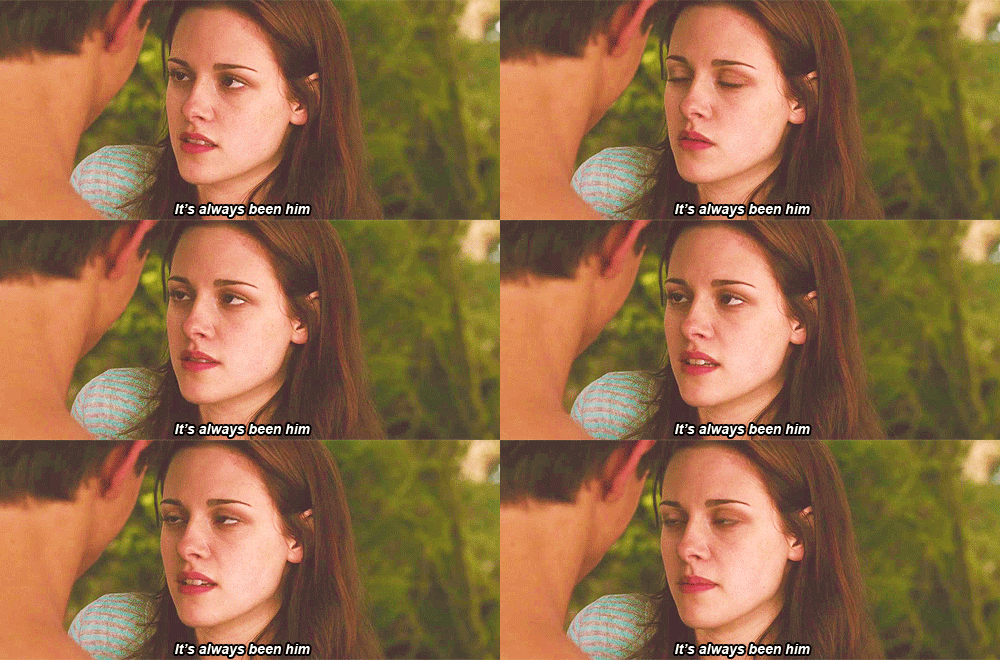
1.  The Bella Swan (i.e. the blank sheet of paper)

image

Who she is:

In Twilight, Bella has absolutely no qualities that make her interesting as a character.  She’s shown to have very little personality, in the books or onscreen, and is only made “interesting” (a relative term here) via the inclusion of her sparkly, abusive boyfriend.  It feeds into the harmful mentality of adolescent girls that you need a significant other in order to find fulfillment, particularly if he’s significantly older and likes to watch you sleep.  Yikes.

Examples:

Bella is welcomed to school by a friendly, extroverted girl and given a place to sit amongst her and her friends.  Despite this girl’s kindness, Bella shrugs her off as a stereotypical shallow cheerleader, and spends her time staring wistfully at the guy across the cafeteria from them.  Once Edward becomes her official boyfriend, she immediately loses interest in her new friends as her life shifts its orbit to revolve completely around him. 

How to avoid her:

  • Female characters are allowed to have lives outside of their significant others.  They’re allowed to have friends, quirks, hobbies, and interests.  Give them some
  • The best fictional relationships are based off of characters who compliment each other, not one character who revolves around the other.  Make sure your female character’s life does not centralize around her significant other.
  • Strong female characters don’t look down on other girls, even if they are outgoing cheerleaders.  Being pasty and introverted doesn’t make you a better person, y’all – if it did, I’d be a decorated hero by now.
  • Give them aspirations besides getting an obsessive, much-older boyfriend.  In fact, don’t give them an obsessive, much-older boyfriend at all – if you do want them to have a significant other, give them one who cares about their interests and accepts that they have lives and goals outside of them.

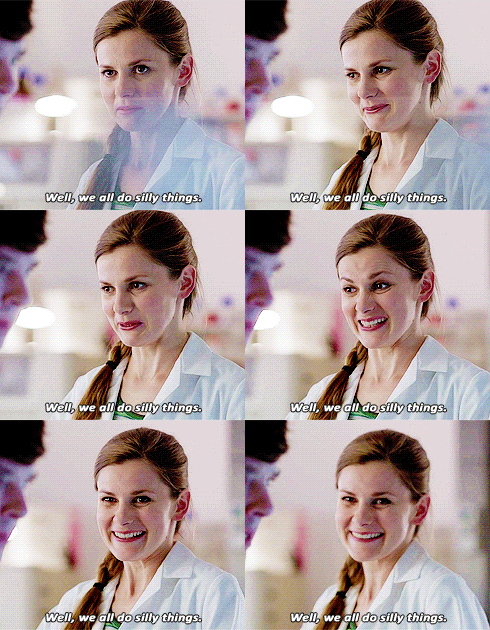
2.  The Molly Hooper (i.e. the starry-eyed punching bag)

image

Who she is:

 Like most things about BBC’s Sherlock, Molly was an amazing concept that went progressively downhill.  I used to love her quiet tenacity and emotional intelligence, and was sure that with her strong basis as a character, she would overcome her infatuation with the titular Sherlock and find self-fulfillment.  Nope!

Examples: 

She remained stubbornly infatuated over the course of five years with an ambiguously gay man who, en large, treated her badly, leading to her public humiliation with zero pertinence to the plot or resolution.  Moreover, her infatuation with Sherlock quickly usurped almost all of her other characteristics, leading her to an increasingly immature characterization that was difficult to relate to.

How to avoid her:

  • By all means, please write female characters who are quiet, kind, and unassuming (a female character does not, contrary to popular belief, need to be rambunctious, callous, or violent to be “strong”) but remember than none of these traits need to make the character a pushover.  Let them stand their ground.
  • Similarly, attraction to men (or anyone, for that matter) does not invalidate a female character’s strength.  Just be sure she values herself more than their attention.
  • As I said earlier, don’t be afraid to make characters who are gentle and soft-spoken, but be wary of making them “childlike,” or giving them an infantile, emotionally characterization.
  • My best advice for writing gentle, soft-spoken, unassuming women would actually to look to male characters in the media fitting this description; since male characters are rarely infantilized as much as women are by popular media, you’ll get a much better idea of what a well-rounded character looks like. 

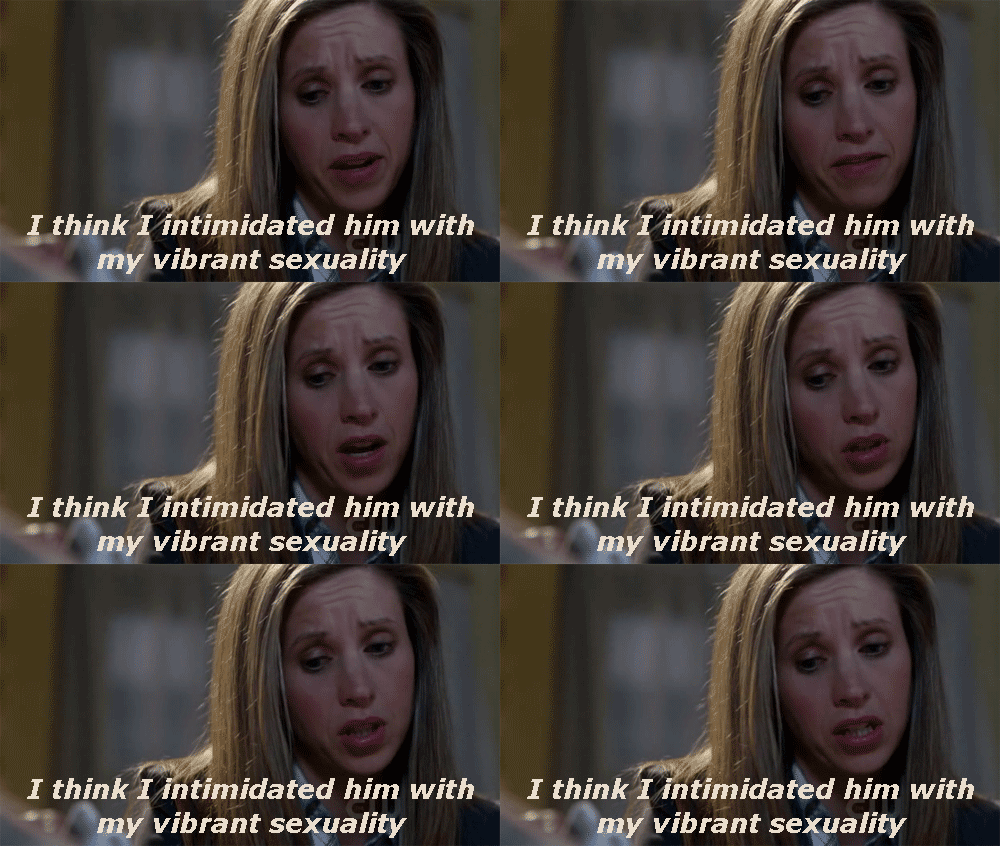
3.  The Irene Adler (i.e. the defanged badass)  

image

Who she is: 

Yup, another one of the BBC Sherlock women, among whom only Mrs. Hudson seemed to come through with her dignity and characterization intact.  In the books, Irene and Sherlock have absolutely zero romantic connotations, only bonded via Sherlock’s irritation and respect with her substantial intelligence.  In the show, it’s a different story entirely. 

Examples:  

Irene is a badass character who’s turned into a teary-eyed Damsel in Distress via her uncontrollable love for the show’s male lead.  It doesn’t help matters that she’s a self-proclaimed lesbian who falls in love with a man, which, unless you’re a woman who loves women yourself and writing about a character realizing she’s bi/pansexual, I would recommend against doing under any circumstances.  She ends up being defeated and subsequently rescued by Sherlock – a far cry from her defeat of him in the books. 

How to avoid her:

  • If you’re writing a badass female character, allow her to actually be badass, and allow her to actually show it throughout your work as opposed to just hearing other characters say it.  And one punch or kick isn’t enough, either:  I want to see this chick jump out of planes.
  • That said, “badass” does not equal emotionally callous.  It doesn’t bother me that Moffat showed Irene having feelings for someone else, what bothers me is how he went about it. 
  • When writing a character who’s shown to be attracted to more than one gender, just say she’s bisexual.  Pansexual.  Whatever, just don’t call her straight/gay depending on the situation she’s in.  Jesus.

4.  The Becky (i.e. the comedic rapist) 

image

Who she is: 

Most people who know me can vouch for my adoration of Supernatural, but it definitely has its problems:  it’s not as diverse as it could be, its treatment of women is subpar, and yes, there is some thinly veiled sexual violence:  all three of its leading characters have dealt with it at one point of another (Dean is routinely groped by female demons, a virginal Castiel was sexually taken advantage of by a disguised reaper, and the whole concept of sex under demonic possession is iffy to say the least.)  It’s rarely ever addressed afterwards, and is commonly used for comedic fodder.  Possibly the most quintessential example of this is Becky.

Examples: 

Becky abducts Sam, ties him to the bed, and kisses him against his will.  She then drugs him, albeit with a love potion, and is implied to have had sex with him under its influence. 

How to avoid her:

  • Male rape isn’t funny, y’all.  Media still takes rape against women a lot more seriously than rape against men, particularly female-on-male rape, and I can assure you its not.
  • Educate yourself on statistics for male sexual assault:  approximately thirty-eight percent of sexual violence survivors are male, for example, and approximately one in sixteen male college students has reported to have experienced sexual assault. 
  • Moreover, be aware that forty-six percent of all instances of male rape have a female perpetrator.
  • Read more here in this amazing article: http://www.slate.com/articles/double_x/doublex/2014/04/male_rape_in_america_a_new_study_reveals_that_men_are_sexually_assaulted.html
  • In other words, treat themes of sexual assault against men as seriously as you would treat themes of sexual assault against women.       

5.  The Movie Hermione (i.e. the flawless superhuman) 

image

Who she is: 

Okay, in and of herself, Movie Hermione is amazing:  she’s beautiful, intelligent, and heroic, as well as possibly the most useful character of the franchise.  She only bothers me in context of the fact that she takes away everything I loved most about Book Hermoine, and everything I loved about Book Ron, too.   

Examples: 

Book Hermione was beautiful, but not conventionally:  she had big, poofy curls, big teeth, and didn’t put a lot of effort into maintaining her appearance.  Movie Hermione looks effortlessly flawless, all the time.  Book Hermione was intelligent, but also loud, abrasive, and unintentionally annoying when talking about her interests (which meant a lot to me, because as a kid on the Asperger’s spectrum, I frequently was/am that way myself – it was nice to see a character struggling with the same traits).  She was also allowed to have flaws, such as struggling to keep up with academia, and being terrified of failure.  

Movie Hermione also took all of Ron’s redeeming qualities, and everything that made him compliment her as a couple:  his street smarts used to compliment her academic intelligence, for example, staying calm while she panicked in the Philosopher’s Stone when they were being overcome with vines.  He also stood up for her in the books against Snape, as opposed to the jerkish “he’s right, you know.”     

How to avoid her:

  • Allow your female characters to have flaws, as much so as any well-rounded male character.  Just be sure to counterbalance them with a suitable amount of redeeming qualities.  This will make your female character well-rounded, dynamic, and easy to get invested in.
  • There’s no reason for your female characters to always look perfect.  Sure, they can be stunningly gorgeous (particularly if their appearance is important to them), but it’s physical imperfections that make characters fun to imagine:  Harry’s scar and wild hair, for example.  Female characters are no different. 
  • If you’re writing a female character to have an eventual love interest, allow their personalities to compliment one another.  Allow the love interest to have qualities that the female character is lacking, so that they can compliment one another and have better chemistry. 
  • Basically, write your female characters as people. 

Check out my list of male characters to avoid here:   https://thecaffeinebookwarrior.tumblr.com/post/161184030785/male-protagonists-to-avoid-in-your-writing-an.

God willing, I will be publishing essays like this approximately every Friday, so be sure to follow my blog and stay tuned for future writing advice and observations!

Uhmmmm, or make your characters however the f*** you want to make them. Writing isn’t supposed to have limits. You write to express yourself, thoughts, feelings, and a world you dream of. Unless you’re writing nonfiction, of course. None of those characters were supposed to be your “everyday basic bitch”.

Ma’am, please calm down.  They’re just tips, and you don’t have to adhere to them if you don’t want to.  

However, since you brought it up, I’m inclined to retort all of these characters perpetuate harmful ideologies that harm real people: 

Bella is a poster child for romanticized relationship abuse, and I’d be hard pressed to point to anyone who did any of the things Edward did (breaking and entering, watching her sleep, possessive behavior, threatening to kill himself because she left him, DATING A MINOR AS A GROWN-ASS MAN) without pointing to someone who probably belongs in jail.  This is harmful, as millions of young girls read that book and thought that that’s how romantic partners are supposed to behave.

Both Molly and Irene represent the two sides of the Moffat coin, where women are either represented as juvenile bimbos who are incapable of finding fulfillment without a man or hypersexualized badasses who are systematically defanged and exist only for male gratification, as well as perpetuating the harmful belief that lesbians can be “turned” straight by the right man and bi people don’t exist.

Becky is LITERALLY A RAPIST and should not have been treated as comic relief, nor should rape themes have been treated as comedic foil because, haha, a woman’s doing it to a man and obviously that never happens.

Movie Hermoine isn’t harmful in any way except for the fact that she was systematically removed of flaws, and arguably, the things that made her a three dimensional and progressive character to begin with.

All of these things effect real life people, and if you’re writer, you have to realize that.

I’m not saying you have to agree with what I say, and I’m not saying you’re not allowed to write/watch/read what you want.  I wholeheartedly enjoy most of these movies and shows myself.  But in order for media to continue to progress and improve, we need to view it with a critical eye, and we need to be open to criticism ourselves. 
Thank you, and please go away.