A few weeks back, I blogged about adjusting your daily word count goal in November, because it just isn’t reasonable to expect to write 1667 words a day every day that month.
Your daily goal should fluctuate to represent your personal schedule and daily needs. Pacemaker is a word count calculator that will do all the pesky math so you create a November calendar with daily goals to do exactly that.
You start by inputting the basic information: your total goal, your start date, and your end date. This alone would give you a daily goal of 1667, but this is just the start.
Next, Pacemaker gives you options for strategies. You may want to work at a simple, steady pace, but you’re not limited to that. If you haven’t been writing for a long time and want to ease into it again, you can chose to let your daily goal grow as the month goes on. If you’re going to be busy at the end of the month, you can chose to do more work in the beginning of the month. It’s totally up to you and your schedule.
Pacemaker also accounts for weekends, and you can chose to do more or less on them, depending on your availability. You can also input specific dates when you know you can do more/less work. If you’re busy on Mondays, have Pacemaker skip them. If you have a lot of free time on Thursdays, make those “push!” days. Finally, you can account for a few emergency days, those days when you expect to write, but find yourself unable to for some reason or other.
Once you’ve accounted for your strategy and schedule, Pacemaker lets you see your month in the form of a calendar, chart, or graph. You can set up an account and track your writing on the website itself (in which case, Pacemaker will adjust your daily goals depending on how far behind or ahead you are), or simply print out or write down your daily goals.
Pacemaker is a wonderful tool for writers–whether you’re participating in NaNo or drafting on your own schedule. Try it out here.
This also sounds like a great tool if you want to catch up by a certain date. Thank you op!
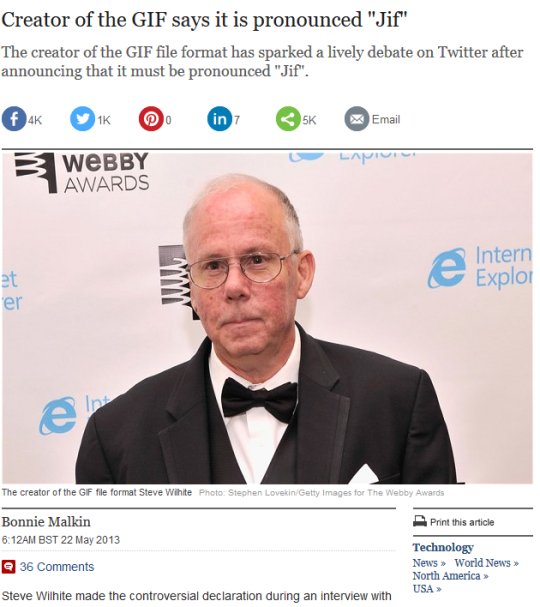
Gif stands for Graphics Interchange Format. when graphics is pronounced “JAFFICKS” Then I will pronounce Gif with a “J”
^ This
It’s followed by an R of course it would be a hard g. But Giraffe is a soft g. Genius is a soft g. Gin is pronounced with a soft g too. GIF is I following a g, it would be pronounced with a soft g.
It aint Jif peanut butter though.
It would still be pronounced like that. The general rule is if the g is followed by an e or i, it’s soft g. U or a consonant is generally a hard g.
I will DIE WITH MY HONOR
Gear =/= Jear
Get =/= Jet
Gift =/= Jift
Give =/= Jive
In English, words with a ‘G’ followed by an ‘e’ or an ‘i’ can be pronounced with either a hard ‘G’ or a soft ‘G’.
Words with Germanic roots such as ‘gear’, ‘get’, ‘gift’, ‘give’ (see above) are pronounced with a hard ‘g’ while words with Latin or Greek roots such as ‘gem’, ‘general’, ‘giraffe’, ‘giant’, are pronounced with a soft ‘g’.
So no, it’s not exactly a “general rule” that ‘g’ followed by an ‘e’ or an ‘i’ makes a soft ‘g’ sound.
Additionally, “GIF” is an ACRONYM starting with a word that begins with a hard ‘g’ sound, so “GIF” is therefore pronounced with a hard ‘g’.
if you’ve ever wondered what it’s like to live in the midwest, this is it.
You missed some of the best ones
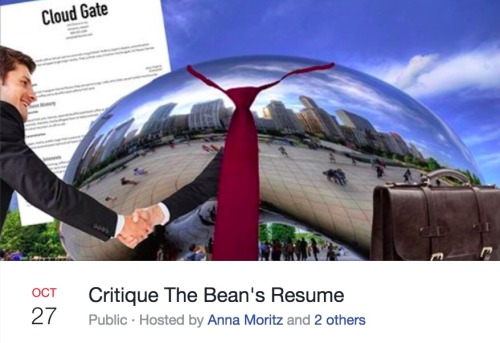
the best part about it is that the art installation isn’t actually called the Bean. It’s called Cloud Gate, and artist Anish Kapoor (yes, THAT Anish Kapoor) hates that we call it the Bean.
But i mean, look at it. It’s a bean.
How could you forget this one though
I HAD NO FUCKING IDEA THAT THE BEAN WAS CREATED BY ANISH KAPOOR.
i had no fucking idea that the bean was created by anish kapoor
^Haiku^bot^0.4. Sometimes I do stupid things (but I have improved with syllables!). Beep-boop!











 Pass Through Fire