An autistic friend of mine just said this to me “The harder I work at communication the more people expect from me and the less they are willing to compromise.” and it is the most fucking heartbreaking thing I’ve heard.
This is very much a thing, though – and I’m sure people across the board with other disabilities can verify that it happens to them, too.
People will turn any progress you make toward being “normal” – no matter how straining or difficult it is for you, no matter how little it actually helps you – as either inspiration porn, or proof that you don’t really need accommodations, you just need to “apply yourself! :)))))”
YUP
Tag: autism
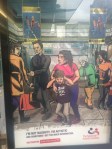
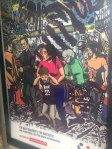
An ad about understanding autism that changes as you move
I looked into the organization that made this ad (national autistic society) and found out that their website actually features posts written by autistic people to persuade people that rather than “curing” autism, the differences among people should be celebrated and theyre primarily recommended to parents learning with new diagnoses :^)
“I’m not naughty, I’m autistic” would’ve changed my life as a kid.
okay but can we also just appreciate how accurately they managed to visually represent what overstimulation feels like?
This ad is 11/10 👌🏼
april is autism awareness month and i havent seen any posts about it on my dash but please remember not to support autism $peaks, not to ‘light it up blue’ or whatever, and instead support cool organizations actually RUN by autistic people, like autism self advocacy network and autism women’s network!
PSA to our followers this Autism Acceptance Month:
- Use Autism **Acceptance** Month (as opposed to Autism Awareness Month).
- NO “light it up blue” or puzzle pieces. Google “Autism Speaks hate group” to learn more.
- Use red or gold instead, which are colors supported by the autistic community.
- Use identity-first language (most autistic people prefer “autistic” instead of “person with autism”), but don’t police the language of someone who prefers to be called a person with autism.
- NO scare terms like “suffering with autism” or “afflicted with autism.”
- Avoid functioning labels like “high functioning” or “low functioning.”
- If autistic voices are not at the center of your efforts, you’re doing it wrong.
- When in doubt, ASK AN AUTISTIC PERSON.
- To learn more about autism, visit autistic-run organizations like the Autistic Self Advocacy Network (ASAN) and Autism Women’s Network (AWN).
There’s a new girl in my kindergarten class who’s autistic and it’s like she’s barely / not really verbal but like idk she opened up to me a little, I don’t tell people I’m on the spectrum at work because they already treat me horribly because I’m the only poc there but like she’s a little Latina girl who I know exactly how she feels and like I was like “hey Nina, If you don’t wanna talk it’s okay, just thumbs up or thumbs down if you understand the (math) problem? Okay?” So we sorta made like a thumbs up and thumbs down thing between us and today it was the most surreal thing because I like “I know they tell you to make eye contact but I’m gonna tell you a trick, look at their neck, chin, hair, and whatever is behind them, I don’t like eye contact very much either? Thumbs up?” And she said with the smallest voice “Thankyou , for not saying I’m dumb” I wanna be the person I needed when I was her age
“If autism isn’t caused by environmental factors and is natural why didn’t we ever see it in the past?”
We did, except it wasn’t called autism it was called “Little Jonathan is a r*tarded halfwit who bangs his head on things and can’t speak so we’re taking him into the middle of the cold dark forest and leaving him there to die.”
Or “little Jonathan doesn’t talk but does a good job herding the sheep, contributes to the community in his own way, and is, all around, a decent guy.” That happened a lot, too, especially before the 19th century.
Or, backing up FURTHER
and lots of people think this very likely,
“Oh little Sionnat has obviously been taken by the fairies and they’ve left us a Changeling Child who knows too much, and asks strange questions, and uses words she shouldn’t know, and watches everything with her big dark eyes, clearly a Fairy Child and not a Human Like Us.”
The Myth of the Changeling child, a human baby apparently replaced at a young age by a toddler who “suddenly” acts “strange and fey” is an almost textbook depiction of autistic children.
To this day, “autism warrior mommies” talk about autism “stealing” their “sweet normal child” and have this idea of “getting their real baby back” which (in the face of modern science) indicates how the human psyche actually does deal with finding out their kid acts unlike what they expected.
Given this evidence, and how common we now know autism actually is, the Changeling myth is almost definitely the result of people’s confusion at the development of autistic children.
Weirdly enough, that legend is now comforting to me.
I think it’s worth noting that many like me, who are diagnosed with ASD now, would probably have been seen as just a bit odd in centuries past. I’m only a little bit autistic; I can pass for neurotypical for short periods if I work really hard at it. I have a lack of talent in social situations, and I’m prone to sensory overload or you might notice me stimming.
But here’s the thing: life is louder, brighter and more intense and confusing than it has ever been. I live on the edge of London and I rarely go into the centre of town because it’s too overwhelming. If I went back in time and lived on a farm somewhere, would anyone even notice there was anything odd about me? No police sirens, no crowded streets that go on for miles and miles, no flickery electric lights. Working on a farm has a clear routine. I’d be a badass at spinning cloth or churning butter because I find endless repetition soothing rather than boring.
I’m not trying to romanticise the past because I know it was hard, dirty work with a constant risk of premature death. I don’t actually want to be a 16th century farmer! What I’m saying is that disability exists in the context of the environment. Our environment isn’t making people autistic in the sense of some chemical causing brain damage. But we have created a modern environment which is hostile to autistic people in many ways, which effectively makes us more disabled. When you make people more disabled, you start to see more people struggling, failing at school because they’re overwhelmed, freaking out at the sound of electric hand dryers and so on. And suddenly it looks like there’s millions more autistic people than existed before.
“…disability exists in the context of the environment.”
Reblog for disability commentary.
That last paragraph is absolutely important.
We look at disability as something constant and stagnant. Whenever we talk about making disabled people’s lives easier it is almost always centered around “curing” the disability instead of evaluating the systemic barriers already in place in our society. A disabled person is never “less disabled” depending on the time and place; the environment is what forces our symptoms to manifest themselves more openly.
“Disability exists in the context of the environment.”
“Disability exists in the context of the environment.”
“DISABILITY EXISTS IN THE CONTEXT OF THE ENVIRONMENT.”
I cannot stress this enough.
 Pass Through Fire